Most companies that say they are going digital are going shopping. They buy a data warehouse, an automation suite, a security product and a dashboard, announce a transformation, and wait for the returns. The returns do not arrive. The tools work exactly as sold. The company simply has no idea what to do with what they produce.
That gap is what digital literacy actually means, and it has almost nothing to do with software. Literacy is the ability to look at what a machine tells you and know whether it is true, what it cost to produce, and what you should do about it. Tools are for sale. Judgment is not.
This matters more than it sounds. Every tool you can buy, your competitor can buy on the same afternoon at the same price. If the software were the advantage, the advantage would last a quarter. What lasts is an organization that understands its own data, its own processes and its own exposure well enough to make decisions nobody else is in a position to make.
Why Literacy Beats Tooling
I am not against buying things. I am against buying things instead of thinking. An organization becomes digitally literate when the people inside it can explain what the system is doing and why, from the analyst reading the report to the executive who signed the contract. Four areas make that visible quickly.
Data You Cannot Interrogate Is Just Storage
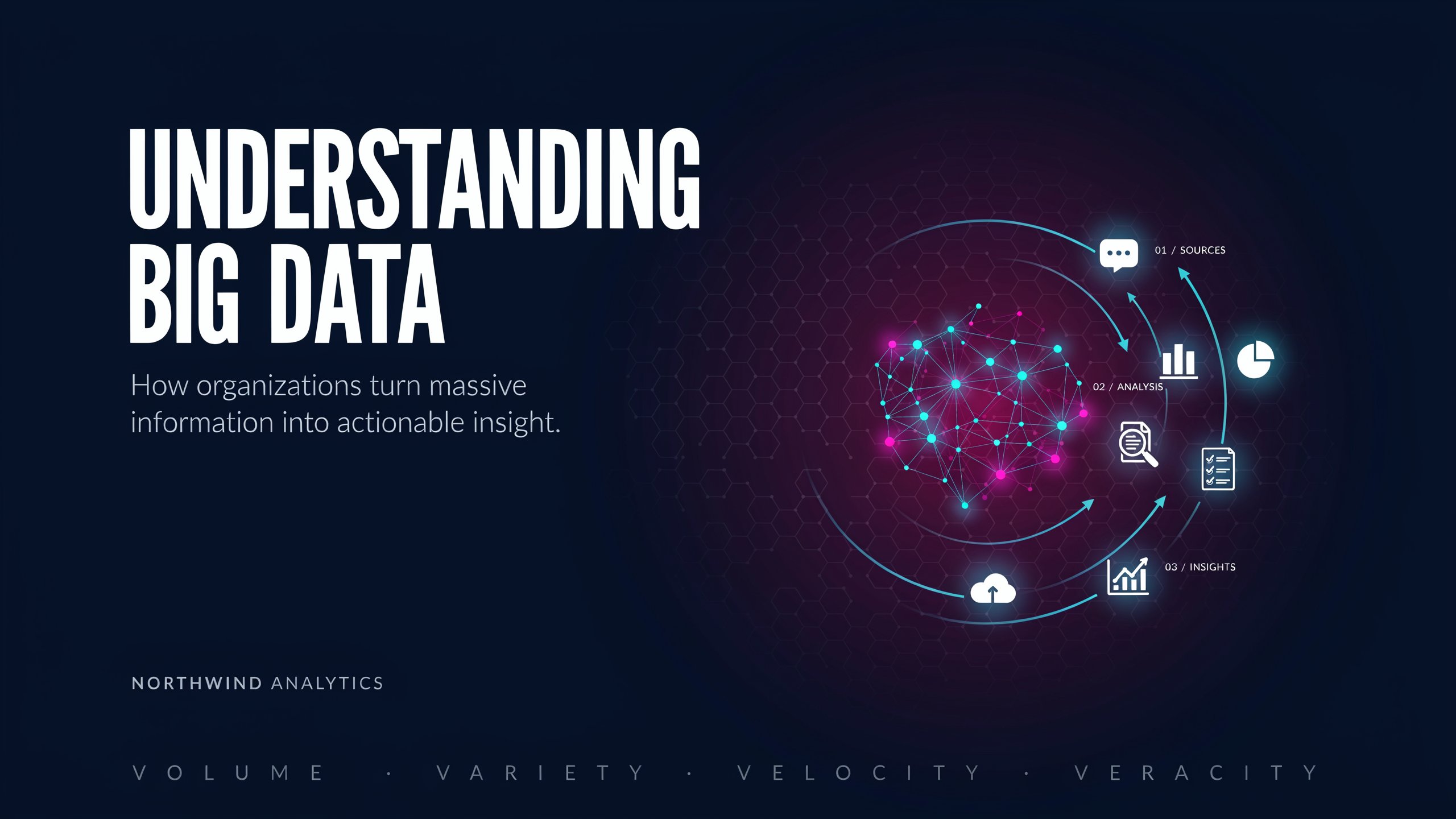
Big data stopped being an interesting phrase around the time everyone started saying it. What matters is whether anyone in your company can state where a number came from, what was left out when it was collected, and what it would take to prove it wrong.
Most organizations are drowning in records and starving for conclusions. They gather from the website, the support desk, the sales team and the surveys, then present a chart in a meeting that nobody in the room is equipped to challenge.
Literacy here is unglamorous. It is knowing the difference between a pattern and a coincidence, and being willing to say so in front of people who would rather hear good news.
Automation Without Understanding Is Just Faster Error
Automation is worth having. It removes work that should never have required a person, and it lets people spend their hours on judgment instead of repetition. That is a real gain and I would take it every time.
But automating a process you do not understand produces your mistakes at scale and at speed. Before anything is automated, someone must be able to describe it end to end, including the exceptions, including what happens when the input is wrong. If nobody can, you do not have a process. You have a habit, and you are about to make it permanent.
The fear that automation eliminates jobs usually misses what is happening. It eliminates tasks. The people who learn what the machine is doing become the ones who decide what it does next. The people who refuse to look end up supervising something they cannot correct.
Security Is A Habit, Not A Purchase
Every company now depends on systems it does not own and cannot see. That is not a flaw in the model; it is the model. The question is what your organization does with that dependence.
Most breaches do not begin with a brilliant attacker. They begin with an ordinary person doing an ordinary thing on an ordinary Tuesday, inside a company that never made the careful alternative obvious. You cannot buy your way out of that. No product turns a distracted employee into an alert one.
What works is dull and continuous. People who recognise a suspicious request. People who are not punished for reporting their own mistakes, because the alternative is that they hide them. And leaders who treat the company’s exposure as their own responsibility rather than a line in somebody else’s budget.
Cost Is The Result, Not The Reason
Efficiency and cost reduction are the usual justification for going digital, and they are the weakest one. Chase cost first and you will buy whatever is cheapest, deploy it badly, book the saving, and watch the capability quietly rot.
Do it the other way round. Build the understanding and let the cost fall out of it. A company that knows which work actually creates value can automate the rest without anxiety, because it knows exactly what it is giving up. A company that does not know will cut something load-bearing and discover it a year later, usually in front of a customer.
A chart nobody in the room can challenge is not evidence. It is decoration.
What Using Your Data Actually Means
People point at the large technology companies and say they won because of data. They won because they were willing to act on what the data told them, including when it contradicted the plan, the founder, or last quarter’s strategy. The same data was available to their competitors.
Using data well means deciding in advance what would change your mind. If a number comes back and nothing about your behaviour changes whichever way it lands, you did not run an analysis. You ran a ritual.
It also means being honest about what customers are telling you. Behaviour is evidence. Stated preference is a claim. When the two disagree, back the behaviour and change the product, however much work went into the version you are defending.
How To Find Out Where Your Organization Actually Stands
You do not need a consultant for this. Ask four questions and pay attention to how quickly people answer. The hesitation is the finding.
Cloud And Security
Can an ordinary employee, not the IT team, explain where the company’s data physically lives and who else can reach it? Nobody needs to be an engineer. But a workforce that has never once thought about where the files go is one convincing email away from finding out the hard way.
Tools And Technologies
Does each department have tools that match the work, and does anyone check? An accounts team running on a spreadsheet that three people understand is not a cost saving; it is a single point of failure with a salary. And a tool that only works at a desk is a tool your people will abandon the moment they are not at one.
Social Platforms
Is your presence on these platforms doing work, or performing? Posting is not a strategy. The useful question is what you learned from those channels in the last quarter that changed an actual decision. If the answer is nothing, you are broadcasting into a room and calling it a conversation.
Judgment About Data
Last, and most revealing: who is allowed to say the numbers are wrong? An organization where only senior people may question the data is not literate, it is obedient. The whole value of literacy is that it distributes judgment, and judgment is worth very little if the people closest to the work are not permitted to use it.
Ownership, Not Adoption
Digitalization will keep advancing whether any particular company takes part or not. That is not a threat, and it is not a reason to panic-buy software. It is simply the conditions.
What I want, and what I look for in any business worth backing, is ownership. A company that understands its own systems well enough to change them, argue about them, and be held to the results. Adoption is easy and buys you parity. Ownership is harder and buys you the right to be different.
So the real test is not whether your organization has the tools. It is whether, if every vendor vanished tomorrow, your people would still know what they were doing and why. If the answer is yes, the tools were an accelerant. If the answer is no, they were a costume.